Is How Fast You Walk More Important Than How Far?
Quick Answer
Often, yes. In 405,981 adults, brisk walkers had longer telomeres, a marker of younger biological age, and it tracked with how intensely people moved, not how much. In midlife women, regular movement also went with 34 percent lower odds of body pain. Brisk starts around 100 steps a minute.
405,981 adults. The brisk walkers carried cells that looked years younger...
and the total amount they walked barely changed it.
The part almost nobody mentions is what that same pace may do for the ache you woke up with.
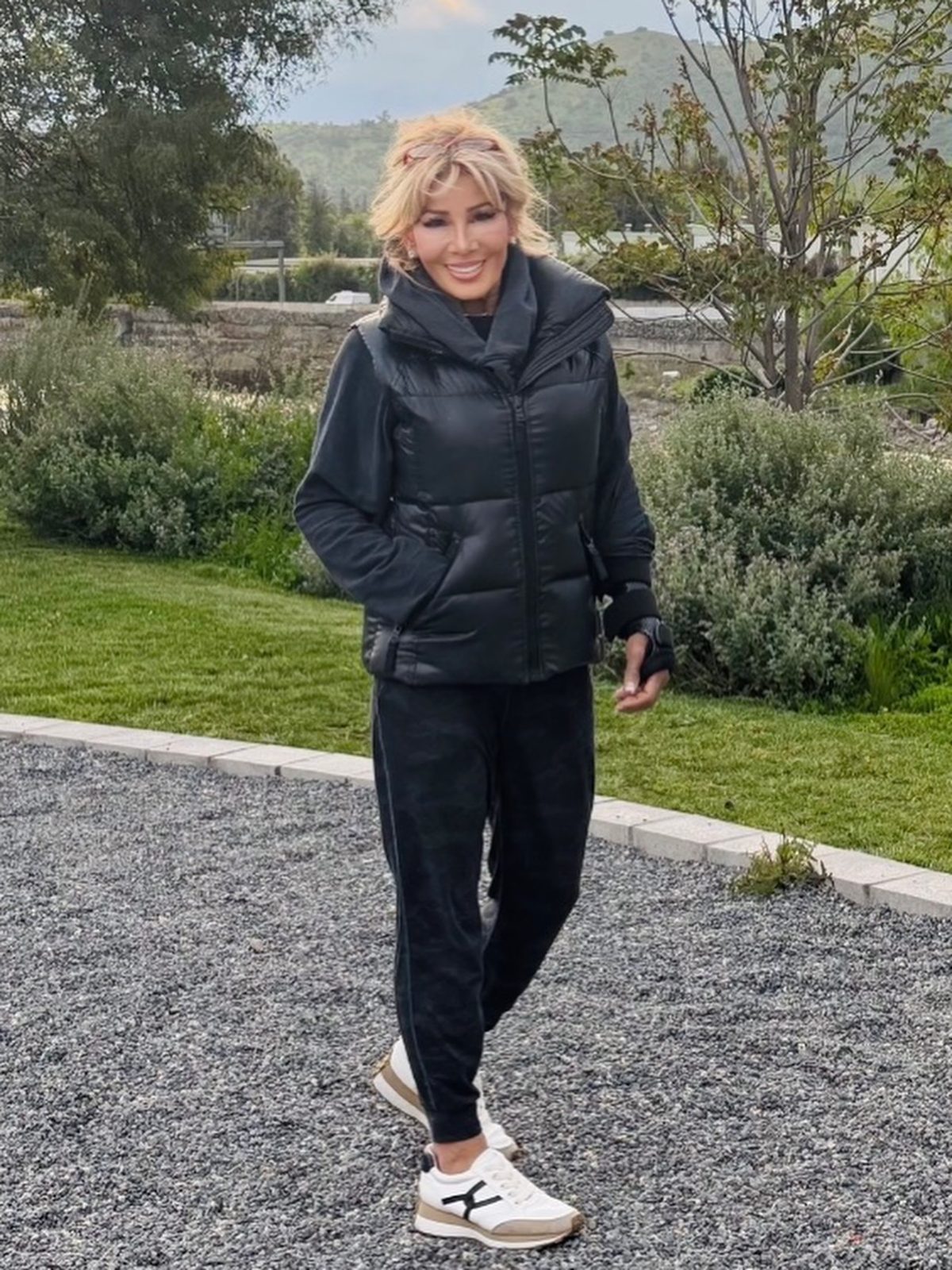
Gravel under my sneakers. Hills in the distance. One hand tucked in my vest pocket. These days I don't finish a walk asking how far I went. I ask how I walked.
What the research found
Researchers at the University of Leicester looked at 405,981 adults in the UK Biobank. People who described their usual pace as steady or brisk had longer telomeres than slow walkers. Telomeres are the protective caps on your chromosomes, and their length is used as a marker of biological age.
Here's the surprising part. When the team checked wrist-worn activity trackers, telomere length tracked with how intense people's everyday movement was, not with the total amount. A genetic analysis also suggested that the pace was driving the telomeres, not the other way around. The researchers estimated that a lifetime of brisk walking could mean a biological age up to 16 years younger by midlife.
Why this matters for the ache
This month, a study in the journal Menopause looked at 3,523 women aged 40 to 60. The ones who moved regularly had 34 percent lower odds of living with body pain, even after accounting for weight, menopause stage and medications.
A second paper in the same journal pooled 12 randomized trials with 1,003 women in the menopause transition. Physical activity improved depression, mood and quality of life, and aerobic movement like walking showed the strongest effect on depression and overall quality of life.
The honest fine print
The pain study is a single snapshot, so women in less pain may simply move more. The telomere study relied on people describing their own pace, and a telomere is a marker, not a promise. So we say "went with," never "cures." Your own body gets the final vote.
The reframe
You don't need more miles. You need a few minutes that change your breath.
How fast is brisk?
About 100 steps a minute. A review of 38 studies landed on that number as the doorway to moderate intensity for adults. Count your steps for 15 seconds and multiply by four. Twenty-five steps in 15 seconds puts you right there. If 100 feels easy, nudge toward 110.
Three things to take with you
- Test your pace once this week. Count steps for 15 seconds, multiply by four, and aim for 100 or more.
- On an achy day, try ten brisk minutes. Rate the ache from 1 to 10 before and after. Let your own numbers speak.
- Trade one long, slow walk for two shorter ones. Walk at a pace where you can talk and can't quite sing.
I am strong, I am steady, I am still becoming. I walk with purpose, with breath, with grace. Today I let my pace speak louder than my distance.
Frequently asked questions
Is it better to walk faster or walk longer after 50?
Both count. The research suggests pace carries more weight than people expect. In 405,981 adults, brisk walkers had longer telomeres, and it tracked with intensity rather than total activity.
How many steps per minute is brisk walking?
About 100 steps a minute is the research marker for moderate intensity. Count for 15 seconds and multiply by four. If it feels easy, aim for 110.
Can walking help menopause aches and joint pain?
In 3,523 midlife women, regular movement went with 34 percent lower odds of body pain. It's an association, not a guarantee, so rate your ache before and after a brisk walk and see what your body tells you.
Does walking help mood during menopause?
A review of 12 randomized trials with 1,003 women found physical activity improved depression, mood and quality of life, with walking-style aerobic work showing the strongest effect on depression.
If this landed
If you'd love support building this into your weeks, The Ageless Reset is six weeks to learn the moves and a full year of community and coaching to keep them, on the easy days and the achy ones. Cohort 3 begins February 1, 2027, and the waitlist hears everything first at thekimfisher.com/waitlist.
I see you. I've got you. You're not behind.
With love,
Kim
Cohort 3 begins February 1, 2027.
Six weeks to learn the moves. A full year of community and coaching to keep them. The waitlist hears everything first.
Join the Cohort 3 waitlist →Sources
Dempsey PC, Musicha C, Rowlands AV, et al. Investigation of a UK Biobank cohort reveals causal associations of self-reported walking pace with telomere length. Communications Biology, 2022;5:381. nature.com/articles/s42003-022-03323-x. 405,981 UK Biobank participants. Steady and brisk walkers had longer leucocyte telomere length than slow walkers; accelerometer data linked telomere length to habitual activity intensity, not total activity. Pace was self-reported. The 16-year estimate comes from the University of Leicester's summary of the findings.
Arteaga E, Blümel JE, et al. Regular physical activity is associated with lower odds of bodily pain in midlife women. Menopause, published online October 13, 2026. Cross-sectional study of 3,523 women aged 40 to 60 in eleven Latin American countries; regular activity went with 34 percent lower odds of generalized bodily pain after adjustment. A single snapshot, so cause and effect can't be separated.
The effectiveness of physical activity interventions on non-physiological symptoms of menopause: a systematic review and meta-analysis. Menopause, published online October 2026 (University College London). Twelve randomized controlled trials, 1,003 women aged 40 to 65 in perimenopause or early postmenopause.
Tudor-Locke C, Han H, Aguiar EJ, et al. Walking cadence (steps/min) as a practical estimate of intensity in adults: a narrative review. British Journal of Sports Medicine, 2018;52(12):776-788. pmc.ncbi.nlm.nih.gov/articles/PMC6029645.
Science-and-soul strength and hormone coach for women in midlife, certified life coach, spiritual counselor, and personal trainer with 44 years of experience. Bestselling author of Morning Mantras That Will Change Your Life. Founder of The Ageless Reset. More about Kim →
Keep reading
- Do You Have to Lift Heavy to Build Muscle After 50?
- Can You Stand on One Leg for 10 Seconds?
- The 10-Minute Longevity Secret
- Strong Legs, Strong Life
More about Kim's science and soul coaching approach or explore the midlife transformation programs.