Muscle Is Your Longevity Organ... Here's Why That Changes Everything
Quick Answer
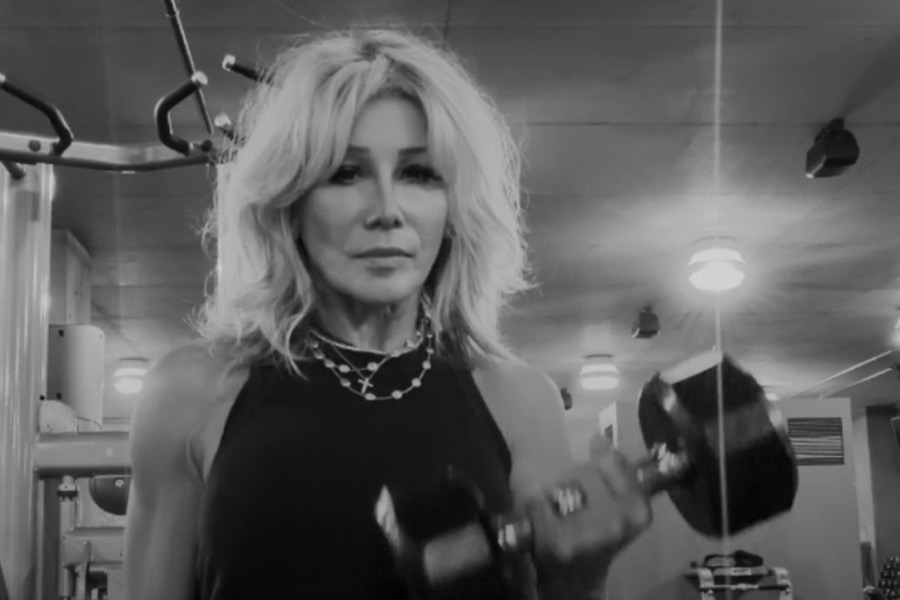
Muscle, and the strength it gives you, is one of the clearest signals of how well you age. In a study of 139,691 adults, every 5 kg of lower grip strength was linked to a 16 percent higher risk of death. Women lose muscle steadily after 30, faster through menopause. The dose that helps is modest: 30 to 60 minutes of strength training a week, plus protein at every meal.
So many women in midlife ask me, "Kim, why isn't anything changing?" I hear it all the time. Women doing everything they've been told to do... eating less, moving more, pushing harder. And their bodies aren't responding the way they used to.
Here's the thing. It's not your fault. It's not a lack of discipline. The missing piece is muscle, and most fitness programs skip it entirely.
Why is muscle called a longevity organ?
Physician Gabrielle Lyon calls muscle "the organ of longevity" in her book Forever Strong, and the research keeps backing her up. Muscle isn't only what moves you. Researchers describe skeletal muscle as a secretory organ: when it contracts, it releases signaling molecules called myokines that talk to your liver, fat tissue and immune system. It's a major place your body stores and uses blood sugar. It loads your bones and carries you up the stairs.
And strength tracks with survival. The PURE study measured grip in 139,691 adults aged 35 to 70 in 17 countries and followed them for about four years. Every 5 kilograms of lower grip strength came with a 16 percent higher risk of death, and grip predicted death better than systolic blood pressure did.
You don't need another cardio plan. You need to understand that muscle is one of the most important investments you can make in your next 30 years.
How much muscle do women lose after 40?
Estimates vary with how muscle is measured. A 2004 review puts the loss at roughly 3 to 8 percent per decade after 30, faster after 60. A 2012 review of many studies put the typical loss for women at about 0.37 percent a year. For women, menopause adds its own push: in the SWAN study, which followed women through the transition with body scans, the rate of fat gain doubled and lean mass began to decline as the transition started, and both trends continued until about two years after the final period.
Here's the part that matters more. Strength falls two to five times faster than muscle size. By 75, women lose about 2.5 to 3 percent of their strength a year. That's not a cosmetic problem. It's a quiet shift in the engine that runs your metabolism, your balance and your independence. Strength is the thing to protect... and strength is also the thing that answers training. I walk through the menopause piece in Is Menopause Really Making Me Lose Muscle?
What does the research say about strength training and lifespan?
A little strength work goes a long way. A 2022 meta-analysis in the British Journal of Sports Medicine pooled 16 studies. Muscle-strengthening activity was linked to a 10 to 17 percent lower risk of death from any cause, heart disease, cancer and diabetes. The sweet spot was about 30 to 60 minutes a week, total. Combined with aerobic activity, the lower risk of death from any cause reached about 40 percent.
Bone answers load. In the LIFTMOR trial, 101 postmenopausal women with low bone mass did 30-minute supervised sessions of heavy lifting and impact work twice a week for eight months. Their lumbar spine bone density rose 2.9 percent, while the gentle home-program group lost 1.2 percent.
Honest framing: the grip study and the meta-analysis are observational, so they show strong associations rather than proof that lifting adds years. Stronger people may be healthier in other ways too. More than an hour a week didn't show extra benefit for mortality, which is good news for busy women. LIFTMOR was a randomized trial, small and closely supervised, in women screened for safety.
That's why the U.S. Physical Activity Guidelines ask every adult for muscle-strengthening work on two or more days a week, on top of walking and other movement.
Why I start everyone with muscle
Kathy was a cardio woman. At 56, she started lifting, because she saw what her mother was going through at 80, and she didn't want that for herself. Now she feels strong, she has more energy, and she's signed up for a hike with her family.
That's why muscle is where I start with everyone. It's what lowers your risk of falling. Bone density, strength, agility, all of it comes from getting stronger. Muscle is the key to longevity because it keeps you independent. Strength is what lets you get up from the toilet on your own and live independently longer.
What can I do this week?
- ✓ Prioritize protein at every meal. Aim for 25 to 30 grams per meal, three times a day, and a daily total of about 0.7 to 0.8 grams per pound of body weight. Four ounces of cooked chicken breast covers one meal. Start with breakfast, the meal that's easiest to come up short on.
- ✓ Lift something challenging twice a week. Two sessions of 20 to 30 minutes puts you in the 30 to 60 minute sweet spot. Five moves: a squat to a chair, a hip hinge, a push, a pull and a loaded carry. Two or three sets of 8 to 12, with a weight that makes the last two reps slow and honest. Add a little when 12 feels clean. Put both sessions in your calendar like appointments.
- ✓ Stop relying on the scale. Track one strength marker instead: the weight you squat, the reps you push, how easily you carry the groceries. The number on the scale might not move... yet your strength, your energy and your bloodwork can tell a completely different story.
Start with protein. Start with strength. Start with one thing.
You don't have to overhaul your life. You have to give your body what it's asking for. And right now, it's asking for muscle.
I am not too late. My muscle is listening. Today I give it a reason to stay.
Frequently asked questions
How much muscle do women lose as they age?
Estimates range from about 0.37 percent a year to 3 to 8 percent per decade after 30, depending on how it's measured, and strength falls two to five times faster than size. The menopause transition adds its own push: in the SWAN study, lean mass began declining as the transition started.
How much strength training do I need for longevity?
Less than most women think. In a 2022 analysis of 16 studies, 30 to 60 minutes of muscle-strengthening a week, total, was where the lower risk of death bottomed out. Two 20 to 30 minute sessions covers it.
How much protein do women over 50 need?
I use 25 to 30 grams per meal, three times a day, with a daily total of about 0.7 to 0.8 grams per pound of body weight. For a 150-pound woman, that's roughly 105 to 120 grams a day.
Is it too late to build muscle and bone at 60?
No. Muscle and bone respond to training at every age I have ever worked with, including my own at 64. In the LIFTMOR trial, postmenopausal women with low bone mass gained 2.9 percent in spine bone density over eight months of twice-weekly lifting. Talk with your doctor first if you have a health condition.
I see you. I've got you. You're not behind.
With love, Kim
Cohort 3 of The Ageless Reset is next.
If you want the structure and the people to keep you lifting for the long haul: six weeks of transformation, held by a full year of community and support. Enrollment opens December 1, 2026, and we begin February 1, 2027. The waitlist hears the details first, and being on it commits you to nothing.
Join the Cohort 3 waitlist →Sources
Leong DP, et al. Prognostic value of grip strength: findings from the Prospective Urban Rural Epidemiology (PURE) study. Lancet. 2015;386(9990):266-273. 139,691 adults aged 35 to 70 in 17 countries, median 4 years; hazard ratio 1.16 for all-cause mortality per 5 kg lower grip strength. Observational. Read the study
Pedersen BK, Febbraio MA. Muscles, exercise and obesity: skeletal muscle as a secretory organ. Nat Rev Endocrinol. 2012. Review of myokines released by contracting muscle and their effects on metabolism and other organs. Read the study
Volpi E, Nazemi R, Fujita S. Muscle tissue changes with aging. Curr Opin Clin Nutr Metab Care. 2004. Review: muscle mass decreases approximately 3 to 8 percent per decade after age 30, with a higher rate of decline after 60. Read the study
Mitchell WK, Williams J, Atherton P, et al. Sarcopenia, dynapenia, and the impact of advancing age on human skeletal muscle size and strength; a quantitative review. Frontiers in Physiology. 2012;3:260. Median muscle loss 0.37 percent a year in women; strength lost 2.5 to 3 percent a year in women at 75, two to five times faster than mass. doi:10.3389/fphys.2012.00260
Greendale GA, et al. Changes in body composition and weight during the menopause transition. JCI Insight. 2019. SWAN cohort with DXA scans: at the start of the menopause transition the rate of fat gain doubled and lean mass declined, continuing until about two years after the final menstrual period. Read the study
Momma H, et al. Muscle-strengthening activities are associated with lower risk and mortality in major non-communicable diseases: a systematic review and meta-analysis of cohort studies. Br J Sports Med. 2022. 10 to 17 percent lower risk of all-cause mortality, cardiovascular disease, cancer and diabetes; J-shaped curve with maximum risk reduction at about 30 to 60 minutes a week. Read the study
Watson SL, Weeks BK, Weis LJ, et al. High-intensity resistance and impact training improves bone mineral density and physical function in postmenopausal women with osteopenia and osteoporosis: the LIFTMOR randomized controlled trial. Journal of Bone and Mineral Research. 2018;33(2):211-220. 101 women; 8 months, twice weekly, 30 minutes; lumbar spine bone density +2.9 percent versus -1.2 percent in controls. doi:10.1002/jbmr.3284
U.S. Department of Health and Human Services. Physical Activity Guidelines for Americans, 2nd edition. 2018. Adults: muscle-strengthening activity involving all major muscle groups on two or more days a week. health.gov
Strength trainer since 1982, certified spiritual counselor and bestselling author of Morning Mantras That Will Change Your Life. Kim helps women in menopause and midlife build muscle and metabolism with science and soul. Founder of The Ageless Reset. More about Kim →
Want your own protein number? Get my free Ageless Starter Kit: your weight times 0.7 to 0.8, with a ready chart.
Keep reading
- What Happens in Your First Week of Strength Training After 50?
- Is Menopause Really Making Me Lose Muscle?
- Your Muscles Aren't Failing You After 50. You're Still Feeding Them Like You're 35.
- Rest Isn't Regression: What Your Body Builds When You Finally Stop
More about Kim's science and soul approach on the About page, or see every way to work with Kim.