Your Genes Aren't Your Destiny: How Much of Lifespan Is Genetic?
Quick Answer
About half, at most. A 2026 study in Science estimated that genes explain roughly 50 percent of the variation in lifespan once accidents and infections are set aside, up from the old 20 to 25 percent. The other half stays open. A Harvard analysis projected that women who reach 50 with five healthy habits live about 14 years longer than women with none.
Your mother's hips. Your grandmother's heart. Your father's blood pressure. Most of us walk into midlife carrying a family story about how this ends.
This year a study made headlines saying genes matter more than we thought. Before you hand your future to your family tree, here's what it actually found... and the half that's still yours.
What did the 2026 lifespan study find?
For years, twin studies put the genetic share of lifespan at about 20 to 25 percent. In January 2026, a team at the Weizmann Institute published a new analysis in Science, using twins raised together and twins raised apart.
Their point was simple. Many deaths in older generations came from accidents and infections, which have nothing to do with genes. Once the researchers set those aside, the genetic share of lifespan rose to about 50 percent.
Honest framing: this is a modeling study, and other scientists are still debating the estimate. It also describes differences across a whole population. It doesn't mean half of your own years are locked in.
How many years can healthy habits add?
Here is the other half. A Harvard team used decades of data from 78,865 women in the Nurses' Health Study. At age 50, women with five low-risk habits had a projected 43 more years of life. Women with none had 29. That's a gap of about 14 years.
The five habits: never smoking, about 30 minutes a day of moderate movement, a healthy weight, a good-quality diet, and no more than one drink a day.
Honest framing: that's a projection built on observational data, so it shows the size of the opportunity, not a guarantee.
Genes set a range. Your habits decide where you land inside it.
Where does muscle fit in?
After 44 years as a strength trainer, this is the habit I'd put first for a woman in midlife. A 2022 review of 16 studies found that 30 to 60 minutes a week of muscle-strengthening was linked with a 10 to 20 percent lower risk of dying early.
Thirty to sixty minutes. A week. That's two sessions of 15 to 30 minutes. And muscle is the tissue menopause asks us to protect, because it holds our strength, our balance and our blood sugar steady for the decades ahead.
What are the five levers for a woman in midlife?
Move: Two strength sessions a week that add up to 30 to 60 minutes, built on squats, hinges, pushes, rows and carries, plus about 150 minutes of brisk walking. Muscle and bone are what the menopause transition asks us to protect, so strength comes first and the walking wraps around it.
Fuel: 25 to 30 grams of protein at each meal, three times a day, about 0.7 to 0.8 grams per pound of body weight across the day. Breakfast is where most women I train fall short, so start there, with plenty of plants around it.
Rest: 7 to 8 hours. Night sweats and 3am waking are common in this season, so protect the window: a cool room, the same wake time every day, and a conversation with your doctor if hot flashes wake you most nights.
Connect: Midlife is often the season of caring for everyone at once, parents and kids and work. Put one standing date with a friend on the calendar, and keep it like an appointment.
Reset: Five minutes a day of slow breathing, in for four counts and out for six, to bring your nervous system down from high alert.
A starter week
Small on purpose. Two short strength sessions, three walks, one breath practice, one friend.
- Monday: Strength, 20 minutes. Sit-to-stand squats from a chair, counter push-ups and a band or dumbbell row, 2 sets of 8 to 10 each. A 25 to 30 gram breakfast.
- Tuesday: A 30-minute brisk walk. Text one friend and set a date.
- Wednesday: Five minutes of the 4-in, 6-out breath before bed. Lights out at the same time as Tuesday.
- Thursday: Strength, 20 minutes, the same three moves, plus a carry: two grocery bags, once around the house.
- Friday: A 30-minute walk. Count your protein: three meals, 25 to 30 grams each.
- Saturday: Walk with the friend you texted. Movement and connection in one.
- Sunday: Rest. Write down one thing that felt easier than it did on Monday.
That's 40 minutes of strength, inside the 30 to 60 minutes the research points to. The walking sits below 150 minutes on purpose. Add ten minutes to each walk every week until you're there.
The bottom line
You don't have to be perfect. You have to be consistent.
The daily choices you make... how you move, what you eat, how you sleep, how you meet stress... these aren't small things. They're the half of the story you get to write.
Your genes might set the range, yet you decide where you land.
Frequently asked questions
Is lifespan mostly genetic?
About half of it, according to a 2026 study in Science that modeled twin data and estimated the heritability of intrinsic lifespan at around 50 percent. That number describes differences across a population, not a set share of your own years. The other half is shaped by how you live and the care you get.
Can healthy habits really add years to my life?
A large Harvard analysis projected that women who reach 50 with five low-risk habits, never smoking, regular movement, a healthy weight, a good diet and moderate alcohol, live about 14 years longer than women with none. It is a projection from observational data, so it shows the size of the opportunity, not a promise.
How much strength training do I need for longevity?
A 2022 review of 16 studies found that 30 to 60 minutes of muscle-strengthening a week was linked with a 10 to 20 percent lower risk of dying early. That is two sessions of 15 to 30 minutes. Start lighter if you are new, and talk with your doctor if you manage a health condition.
If this landed
If you're wondering which of these five matters most for your body right now, the Science & Soul Assessment will point you to your first one in about two minutes, free.
I see you. I've got you. You're not behind.
With love,
Kim
Not sure which lever matters most for your body right now?
Take the free two-minute Science & Soul Assessment and find out whether strength, protein, sleep, or stress care is the one most worth your attention this season.
Take the Science & Soul Assessment →Sources
Shenhar B, Pridham G, De Oliveira TL, et al., Alon U. Heritability of intrinsic human life span is about 50% when confounding factors are addressed. Science. 2026;391(6784):504-510. Weizmann Institute modeling of twin cohorts raised together and apart; earlier twin estimates of 20 to 25 percent rose above 50 percent once extrinsic deaths were accounted for. A modeling study, and its estimate is debated. doi.org/10.1126/science.adz1187
Li Y, et al. Impact of healthy lifestyle factors on life expectancies in the US population. Circulation. 2018;138(4):345-355. Built on 78,865 women in the Nurses' Health Study; at age 50, women with all five low-risk factors had a projected life expectancy of 43.1 more years versus 29.0 with none, a gap of 14.0 years. Projection from observational data. doi.org/10.1161/CIRCULATIONAHA.117.032047
Momma H, et al. Muscle-strengthening activities are associated with lower risk and mortality in major non-communicable diseases: a systematic review and meta-analysis of cohort studies. British Journal of Sports Medicine. 2022;56(13):755-763. 16 cohort studies; 30 to 60 minutes a week was associated with the largest reduction in all-cause mortality, about 10 to 20 percent. Observational. doi.org/10.1136/bjsports-2021-105061
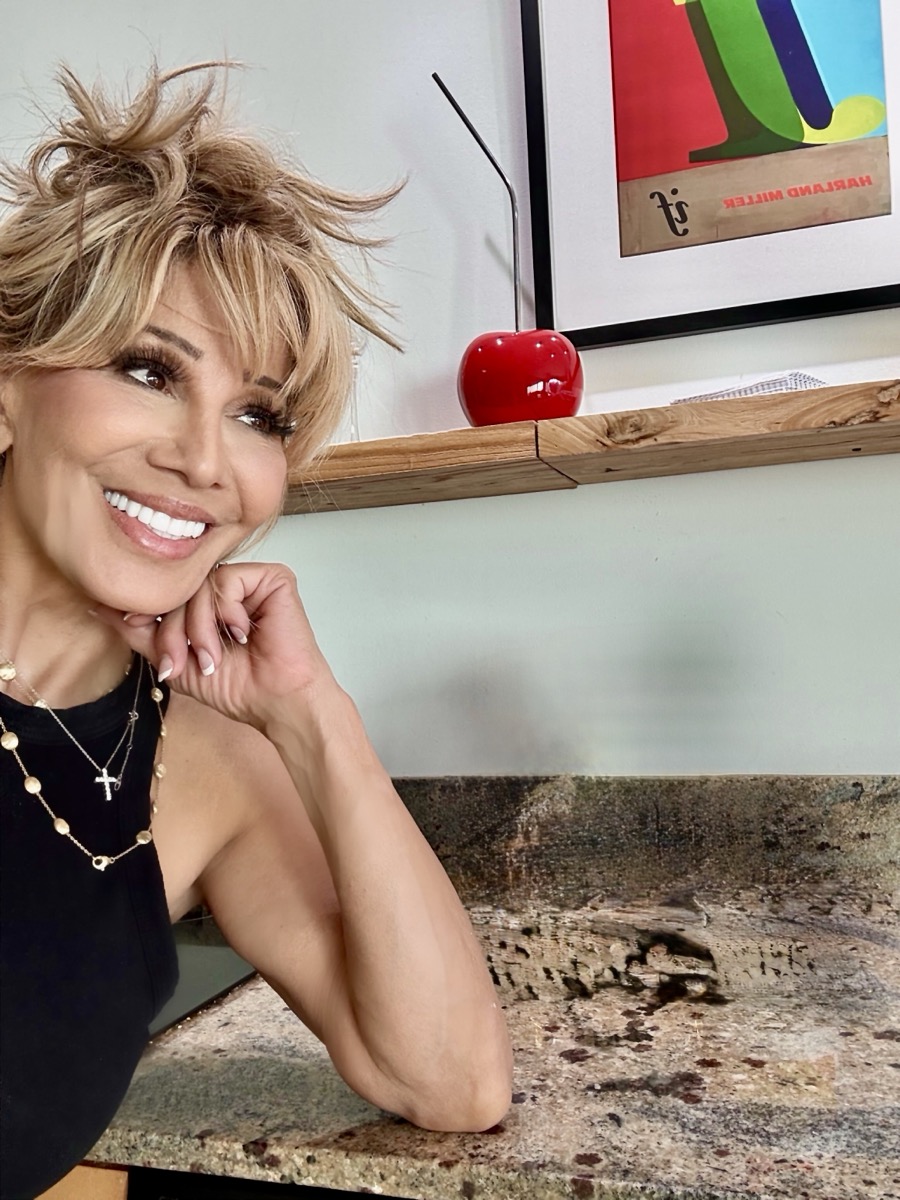
Strength trainer since 1982, certified spiritual counselor and bestselling author of Morning Mantras That Will Change Your Life. Kim helps women in menopause and midlife build muscle and metabolism with science and soul. Founder of The Ageless Reset. More about Kim →
Want your own protein number in two minutes? Get my free Ageless Starter Kit.
Keep reading
- Do Exercise Snacks Work for Women Over 50?
- The Thirty-Second Test I Run Before Anything Else
- Is How Fast You Walk More Important Than How Far?
- Women Live Longer. So Why Aren't We Aging Better?
More about Kim's science and soul approach on the About page, or see every way to work with Kim.