Is It Too Late to Start Exercising After 50?
Quick Answer
Almost never. In a 22-year study, adults who became active in midlife had 79 percent lower odds of frailty later, nearly matching lifelong movers at 80 percent. The menopause shift in the body is real and starts early, and starting now still changes what comes next. Begin with three 15-minute walks this week.
Five hundred and seventy-four adults. Twenty-two years of follow-up.
The ones who started moving in midlife ended up almost exactly where the lifelong movers did.
The part almost nobody says out loud is what that means for the window you think you already missed.
Forty-four years of this work. I've walked into a client's living room on a quiet Tuesday and met a woman of 58, certain she was too late, sure the good years were already spent. I've watched her grow stronger than the day we met. I'm 64, and I still lift. So when a new study says a late start lands nearly where never stopping does, I didn't need convincing. I needed you to see the numbers.
What a 22-year study found
Researchers followed 574 adults in Greece for 22 years, part of the long-running ATTICA study, and measured their activity three times across midlife. Compared with people who stayed inactive, those who had been active the whole time had 80 percent lower odds of being frail or pre-frail two decades later.
Here's the surprising part. The people who started out inactive and became active during midlife had 79 percent lower odds. Starting late counted almost as much as never stopping. The authors estimate that about half of the later frailty in this group traced back to inactive midlife patterns.
The honest fine print
This is an observational study in one city, activity was self-reported, the sample is modest, and a design that follows people over decades misses those who didn't make it. It shows a strong association, not proof. So we say "went with," never "guarantees." Your own body gets the final vote.
Why the timing feels so sudden
If it feels like your body changed all at once, you're not imagining it. This month, a study in Nature Medicine reconstructed roughly 300 million laboratory tests and found a step-like shift right at the final menstrual period, across markers for bone, cholesterol, liver and kidney, with the drift starting more than a decade earlier. Hormone therapy softened that step in the data.
The honest caveat: these are lab values modeled from population data, not women followed one by one over time, and a lab shift isn't a symptom or a diagnosis. Read it as information, not alarm. The change is real... and what you do next still counts, which is the whole point of the study above.
The reframe
You don't need to have started younger. You need to start the next 15 minutes.
How much movement are we talking about?
The long-term target in the research is about 150 minutes of brisk walking a week. You don't build that in a day. Three 15-minute walks is 45 minutes, most of the first chunk. Brisk means a pace where you can talk and can't quite sing, around 100 steps a minute.
Three things to take with you:
- Build the first 45 minutes. Put three 15-minute brisk walks on the calendar this week, with real dates, before Monday. Next week, add one more.
- Add ten chair sit-to-stands when you get home from each walk. Up and down from a sturdy chair, ten times, no hands if you can manage it.
- Book one conversation. Ask your doctor about hormones and a bone-density scan, and keep moving while you wait for the appointment.
I am not late. I am starting. The body I have today still answers to what I do next.
Frequently asked questions
Is it too late to start exercising in your 60s?
Almost never. In a 22-year study, adults who became active in midlife had 79 percent lower odds of frailty later, nearly the same as people who had moved all along. It's an association, not a promise, and the direction is clear: starting now still counts.
Can you lower your risk of frailty by starting late?
The research suggests yes. People who went from inactive to active during midlife landed almost exactly where lifelong movers did on frailty two decades on. We say “lower odds,” never “prevents,” because this is observational, and the comparison is the heart of the finding.
How much exercise do I need after menopause?
The long-term target in the studies is about 150 minutes of brisk walking a week, built gradually. Three 15-minute walks is a strong first week. Brisk is roughly 100 steps a minute, a pace where you can talk and can't quite sing.
Does menopause really cause sudden body changes?
A Nature Medicine study of about 300 million lab tests found a step-like shift at the final period across several body systems, with the drift beginning over a decade earlier. It validates the “it happened all at once” feeling. It's modeled from population data, so read it as information, not a diagnosis.
If this landed
If you'd love support turning a late start into a lasting one, that's the whole design of The Ageless Reset. Six weeks to begin, and a full year of community and coaching to keep going, on the weeks it's easy and the weeks it isn't. Cohort 3 begins February 1, 2027, enrollment opens December 1, and the waitlist hears everything first at thekimfisher.com/waitlist.
With love,
Kim
Cohort 3 begins February 1, 2027.
Six weeks to begin. A full year of community and coaching to keep going. Enrollment opens December 1, 2026. The waitlist hears everything first.
Join the Cohort 3 waitlist →Sources
Panagiotakos DB, et al. Physical activity trajectories across midlife and odds of frailty 22 years later: the ATTICA cohort study. The Journal of Frailty & Aging. Published online October 19, 2026. pubmed.ncbi.nlm.nih.gov/42895852. Observational, 574 adults in one city, activity self-reported at three points across midlife. Consistently active adults had 80 percent lower odds of frailty or pre-frailty at 22 years; those who moved from inactive to active in midlife had 79 percent lower odds.
Reconstruction of menopause-related biomarker trajectories from population-scale laboratory data. Nature Medicine. Published online October 12, 2026. pubmed.ncbi.nlm.nih.gov/42864411. Computational reconstruction of roughly 300 million laboratory tests, cross-sectional rather than longitudinal. A step-like change in bone, lipid, liver and kidney markers at the final menstrual period, with drift beginning more than a decade earlier, softened in women on hormone therapy.
Tudor-Locke C, Han H, Aguiar EJ, et al. Walking cadence (steps/min) as a practical estimate of intensity in adults: a narrative review. British Journal of Sports Medicine, 2018;52(12):776-788. pmc.ncbi.nlm.nih.gov/articles/PMC6029645. Source of the 100 steps a minute marker for moderate intensity.
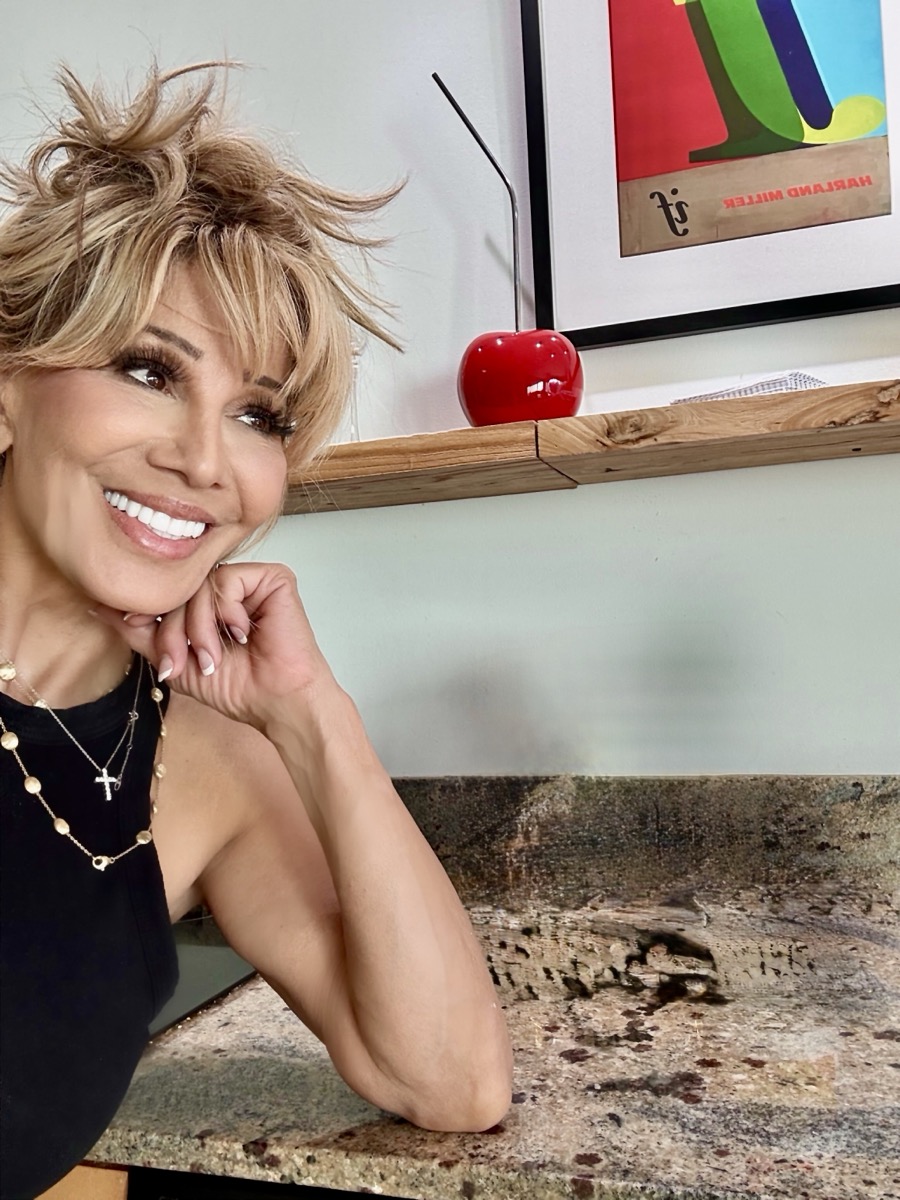
Strength trainer since 1982, certified spiritual counselor and bestselling author of Morning Mantras That Will Change Your Life. Kim helps women in menopause and midlife build muscle and metabolism with science and soul. Founder of The Ageless Reset. More about Kim →
Keep reading
- You're Not Starting Over: The Science of Muscle Memory and Starting Again
- Is How Fast You Walk More Important Than How Far?
- Can You Stand on One Leg for 10 Seconds?
- Muscle Is Your Longevity Organ... Here's Why That Changes Everything
More about Kim's science and soul approach on the About page, or see every way to work with Kim.