You Are Not Behind: A Spiritual Reframe for Women Who Think They Missed Their Moment

Quick Answer
You are not behind. You are still becoming. The idea that midlife is a closing is cultural, not biological. In a ten-year Stanford study, emotional well-being kept improving with age, and in a classic Tufts trial, nursing home residents around 90 gained 174 percent in strength after eight weeks of lifting. Midlife is a recalibration, and the wisdom you carry now is your starting point.
She sat across from me, hands wrapped around her mug, eyes shining with tears she was trying not to spill.
"I feel like I missed it," she said.
"By now I was supposed to know what I'm doing with my life, with my body, with everything. I'm so behind."
If you've ever felt that in your bones, this is for you.
Why do so many women feel behind in midlife?
From the time we are young, we are handed a timeline. By this age, your body looks like this. By that age, your career is here. By another age, you start slowing down.
No one told you what to do with the moment when everything you built, career, family, identity, no longer fits as comfortably as it once did. Our culture loves the fresh start of the 20s. It doesn't know what to do with the sacred turning of your 50s and 60s.
So it tells you that if you are not "done" by now, you must be late. And the other sentence I hear all the time is its twin: "I feel like I've lost myself."
You haven't lost yourself. You're meeting a version of you that hasn't existed yet.
What does the research say about change after 50?
The science is kinder than the timeline.
Your inner weather tends to improve. Laura Carstensen's team at Stanford had adults of all ages report their emotions at random moments for a week, then repeated it five and ten years later. Older age was linked with more positive overall well-being, more emotional stability, and a richer mix of feelings at once.
Your muscles still answer. In a 1990 Tufts study, nine frail nursing home residents averaging 90 years old lifted three times a week for eight weeks. Their strength rose an average of 174 percent. And a 2026 meta-analysis of 4,019 women found strength gains from lifting were almost exactly the same before and after menopause.
Honest framing: the emotion study describes averages across many people, and the Tufts study was tiny. Neither promises anything about your particular life. Both say the door is open far later than the timeline claims.
You are not late. You are in the middle of a transformation your younger self could not have imagined.
What if the empty space is the point?
Midlife has a way of stripping away the roles you've been playing. The caretaker. The achiever. The one who holds it all together. When those roles shift... when the kids leave, when the career plateaus, when your body starts speaking a language you don't recognize... a space opens up.
Most women try to fill it immediately. Another project. Another diet. Another way to stay busy enough not to feel it.
Yet what if the space is the point?
What if the emptiness you're feeling isn't something to fill... it's something to finally listen to?
The question is not: "Why didn't I figure this out sooner?"
The question is: "What do I want to build with the wisdom I have now?"
You are not behind
I believe we're never too old to change, and never behind. We're always improving, always pivoting. We never start from zero. We simply decide to become better versions of ourselves. We're exactly where we're supposed to be. Sometimes it takes us a little longer to take that next step, and when we take it, we're ready for it.
A message from me
One gentle practice for this week
Set a five-minute timer and open your journal.
At the top of the page, write: "Where am I still using force instead of support?"
Let yourself answer honestly. In your schedule, in your eating, in your relationships with your own body.
Then circle one place where you are ready to choose support instead. Not ten. One.
And give your body one small yes today: ten slow sit-to-stands from a kitchen chair. That's the whole assignment.
“I was 60 and had never lifted a weight in my life. I’m so happy I started.”
Michelle, 60 · Ageless Reset, Cohort 1
Michelle is my little sister, and her words are shared with her permission.
Three takeaways
- The story that you are "behind" is cultural, not spiritual truth, and the Stanford, Tufts and 2026 lifting studies above tell a kinder one.
- Midlife is a powerful reset point for your body, your nervous system, and your identity.
- You are allowed to start again at 50, 60, 70, with more wisdom and more softness than you had at 30.
Mantra for this season
You're not behind. You're exactly where you need to be to begin again gently.
Frequently asked questions
Is it too late to start strength training at 60?
No. In a classic Tufts study, nursing home residents averaging 90 years old gained 174 percent in strength after eight weeks of lifting, and a 2026 meta-analysis of 4,019 women found strength gains were similar before and after menopause. Start with what your body can do today.
Why do I feel like I've lost myself in midlife?
Often because the roles that defined you, caretaker, achiever, the one who holds it together, are shifting all at once. That disorientation is not a breakdown. It is the space where the next version of you takes shape.
Does happiness really improve with age?
On average, yes. A Stanford study that sampled adults' emotions over ten years found older age was linked with more positive well-being and greater emotional stability. Averages are not promises, yet they do contradict the idea that your best years are behind you.
If this landed
Wherever you are right now is the right starting point.
I honor your soul. I've got you.
With love,
Kim
Not sure where to begin again?
The free Science & Soul Assessment is seven questions in about two minutes. It points you to the gentlest first step for your body and your season, whether that is strength, food, sleep or stress.
Take the Science & Soul Assessment →Sources
Carstensen LL, Turan B, Scheibe S, et al. Emotional experience improves with age: evidence based on over 10 years of experience sampling. Psychology and Aging. 2011;26(1):21-33. About 180 adults sampled five times a day for a week, repeated at five and ten years; aging associated with more positive well-being and greater emotional stability. PubMed
Fiatarone MA, Marks EC, Ryan ND, Meredith CN, Lipsitz LA, Evans WJ. High-intensity strength training in nonagenarians: effects on skeletal muscle. JAMA. 1990;263(22):3029-3034. Ten frail nursing home residents aged about 90; strength gains averaged 174 percent in the nine who completed eight weeks. PubMed
Isenmann E, Geisler S, Havers T, et al. It's never too late: the impact of resistance training on strength and body composition in females across the lifespan. Journal of Science and Medicine in Sport. 2026;29(10):1174-1185. 126 studies, 4,019 women; strength gains similar in premenopausal and postmenopausal women. PubMed
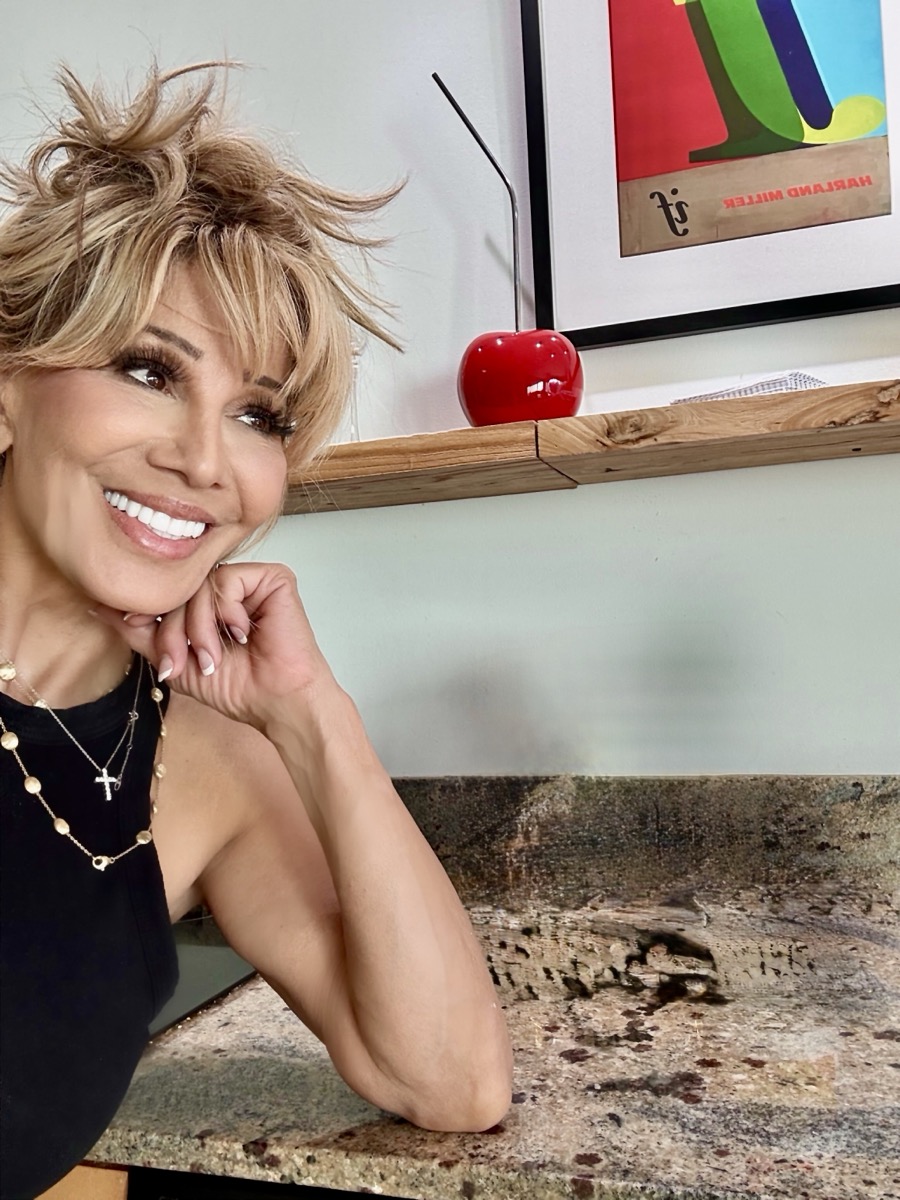
Strength trainer since 1982, certified spiritual counselor and bestselling author of Morning Mantras That Will Change Your Life. Kim helps women in menopause and midlife build muscle and metabolism with science and soul. Founder of The Ageless Reset. More about Kim →
Want a five-minute way to begin again gently each morning? Get my free Morning Reset Ritual.
Keep reading
- Why Can't I Stay Consistent on My Own?
- A Healthy Daily Routine for Women Over 50: My Full-Spectrum Reset Day
- The Circle, The Stars, and The Wizard
- Holiday Stress in Midlife: A Gentle Mindset Reset
More about Kim's science and soul approach on the About page, or see every way to work with Kim.